
Sonsio 2026: Engineering an IndyCar for the Most Unusual Circuit on the Calendar
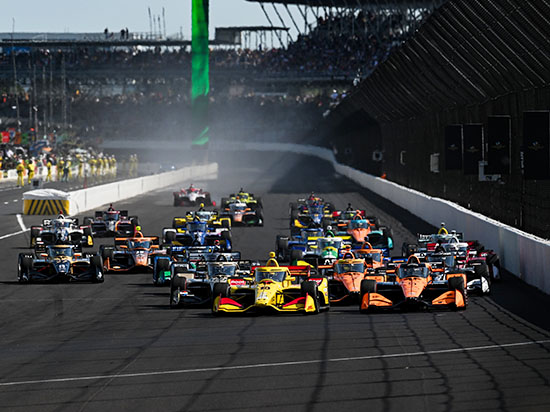
Christian Lundgaard won the 2026 Sonsio Grand Prix for Arrow McLaren at the Indianapolis Motor Speedway road course, taking his second career IndyCar victory after a race that opened with a multi-car collision on the very first lap and did not settle down from there. The win ended a 47-race drought for the Danish driver and was built on precise strategy, a perfectly executed late-race pass on David Malukas, and a car that held together through 90 laps of racing on one of the most technically unusual circuits in the series.
A Circuit Unlike Any Other
The Indianapolis Motor Speedway road course is a hybrid in the truest sense. The 2.439-mile, 14-turn layout uses the front straight and part of the oval banking before diving into the infield for a sequence of tight corners, a long back straight along Hulman Boulevard, and a series of technically demanding sections before rejoining the oval and returning to the Yard of Bricks. No other venue on the IndyCar calendar asks a car to transition so abruptly between two fundamentally different types of surface, two different speeds, and two different aerodynamic regimes within a single lap.
Cars hit approximately 175 mph on the approach to Turn 1, using the same broad, ultra-smooth oval asphalt that the Indianapolis 500 cars run on a fortnight later. Within seconds they are braking hard for a 90-degree right-hander and entering a tight infield section built on resurfaced road course asphalt with a completely different grip character, different surface texture, and different load requirements. Then they accelerate again down Hulman Boulevard before the infield tightens once more. That cycle repeats 90 times during the race, and every material on the car must cope with the full range of demands each time around.
Qualifying in 2026 was moved to race morning after severe weather forced it off the Friday schedule — which compressed the preparation window for engineers and gave the field even less time to dial in their setups before the race began. When the Lap 1 incidents wiped out multiple cars including Scott Dixon, Pato O'Ward, Felix Rosenqvist, and Caio Collet in a chain-reaction at Turn 1, the field order was reshuffled within minutes and teams were reacting to a race that had already departed from anything they had modelled.
The Surface Problem: Two Tracks in One
surface itself, and it is a challenge with no clean solution. The oval section uses asphalt laid and maintained to the standards of one of the most prestigious motor racing facilities in the world — smooth, consistent, and purpose-built for sustained high-speed running. The infield section is a different proposition: a road course surface that has been repaved and modified over the years but which carries the texture, joint lines, and wear patterns of a circuit that hosts multiple series across a much wider range of speeds and vehicle types.
The consequence for engineers is a car that is never fully optimised for either surface. A suspension specification that maintains a stable aerodynamic platform and efficient ride height on the smooth oval section may be too stiff to manage the infield's surface variations without generating the kind of transient vertical loads that upset balance and put additional stress on structural components. A softer setup that handles the infield well risks losing aerodynamic efficiency on the oval, where ride height control matters most. As with Long Beach, third springs and progressive bump stop elements are used to manage this compromise — but at IMS the contrast between the two surfaces is more extreme than at any other circuit in the series, and the components tasked with spanning that gap are working harder as a result.
The aluminium alloy components throughout the suspension — wishbones, uprights, push and pull rods — must carry loads that shift in character abruptly as the car crosses from one surface type to the other, lap after lap. The fatigue behaviour of those components across 90 laps of that repeated cycling is not the same as the behaviour modelled from a circuit where the surface is consistent throughout. Engineers designing parts for IMS must account for loading patterns that change not just through the lap but in nature, and material consistency is the baseline that makes those models reliable.
Thermal Conditions: Indiana in May Is Not Predictable
The weather at Indianapolis in early May sits in a transitional zone between the cool of a Midwestern spring and the warmth of summer, and it is notoriously unpredictable. Average temperatures are in the low twenties Celsius, but both cooler and significantly warmer days are common, and May is the rainiest month of the year at the Speedway. The 2026 race weekend demonstrated exactly how variable those conditions can be — qualifying was cancelled on Friday due to severe weather, moving to Saturday morning, and teams had to work through a constantly shifting environmental picture from the moment they arrived.
For engineers, that variability has direct material consequences. Components specified for an expected temperature range may be operating outside that range if conditions change between sessions. The relationship between ambient temperature and the thermal behaviour of aluminium suspension components, titanium fasteners, nickel superalloy exhaust parts, and carbon fibre aerodynamic surfaces is well understood in isolation — but the rate at which those components warm up and the temperatures they stabilise at in race conditions are both functions of the ambient environment. A car that has been set up and tested in 18°C conditions may behave differently if race day brings 27°C sunshine and high humidity, with track surface temperatures rising correspondingly as the afternoon progresses.
The transition from the Sonsio Grand Prix to Indianapolis 500 preparation — which begins the following week — adds a further dimension to the material picture. Teams are often running the same chassis across both events, rebuilding it from road course specification to oval specification in the days between. As Team Penske's general manager Kyle Moyer has described it, the conversion involves practically the entire car: gearbox, uprights, front and rear suspension, wings. The only constant, typically, is the engine. Every material used in those components must therefore be specified not just for the road course demands of the Sonsio Grand Prix but for the very different loads and operating conditions of oval running at 230 mph. What the team learns from material behaviour during the race feeds directly into how they prepare those same materials for the 500.
High Speed into Tight Corners: The Braking and Structural Load Problem
The approach to Turn 1 at the IMS road course is one of the most demanding braking events in the IndyCar calendar. Cars arrive from the oval asphalt at close to 175 mph and decelerate into a tight 90-degree right-hander. The braking zone is long, the surface transitions from oval to road course asphalt partway through it, and the proximity of concrete barriers on the exit means there is no margin for error if a component underperforms or a driver misjudges the limit.
The 2026 race illustrated exactly what happens when that Turn 1 environment goes wrong at the start — Rosenqvist's lock-up triggered a chain reaction that eliminated multiple front-runners before the first lap was complete. Lock-ups generate flatspots on tyres, but they also subject brake components, suspension geometry, and wheel assembly materials to impulse loads that normal braking does not — the sudden change in wheel rotation transfers abnormal stress through the upright, calliper mounting, and into the surrounding structure. Materials with good fatigue resistance absorb those events without accumulating damage that would compromise performance later in the race; those with tighter margins may not.
The same braking demands repeat at the end of Hulman Boulevard into the Turn 7 complex, and again at Turn 13 — the tight left-hander that leads to pit road. Brake disc temperatures at these events reach the upper range of what carbon-carbon composite systems can manage, placing sustained thermal load on the titanium and steel components that mount and support the brake assembly. Those components must maintain their dimensional accuracy through each braking event to preserve the geometry that engineers have designed around. Distortion or creep under sustained thermal load is the failure mode that engineers are designing against, and the alloy specification of those parts — combined with the quality and consistency of the material they are manufactured from — is what determines how much margin exists between the operating conditions and that failure mode.
The Oval Section: Aerodynamic Load That Road Course Setups Cannot Fully Exploit
The presence of the oval front straight in the layout creates an aerodynamic load condition that no other IndyCar road course imposes. On the approach to Turn 1, with the car at racing speed on smooth oval asphalt, the aerodynamic downforce generated is higher than at any equivalent point on a pure road course. The front wing, floor, and rear wing are all working at or near their peak load for a sustained period, placing the carbon fibre composite structures that carry those loads under the kind of sustained stress that road course setups are not typically designed around.
The specific concern is that a setup optimised for the infield section — where mechanical grip and suspension compliance matter more than peak downforce — may be running a lower ride height or softer suspension specification than would be ideal for managing the aerodynamic loads on the oval straight. The floor and diffuser, in particular, generate ground-effect downforce that is sensitive to ride height; if the suspension allows more movement than ideal under the oval loading, the aerodynamic performance varies in ways that the engineer has not fully modelled.
Carbon fibre lay-ups for the floor and front wing at IMS therefore need to balance stiffness under the peak oval loads against the flexibility requirements of road course running — a trade-off that is unique to this circuit.
The structural integrity of bodywork is also tested by the transition between surfaces. The joint line between the oval and infield asphalt introduces a brief but repeatable vertical input into the car at high speed. A carbon fibre body panel that is not specified for that repeated impact load can develop localised fatigue at the attachment points even if the visible aerodynamic surface remains undamaged — the kind of failure mode that only becomes apparent in post-race inspection or when a second similar impact occurs during the race.
How Smiths High Performance Support These Demands
The engineering challenges at IMS are specific, cumulative, and — because of the circuit's dual-surface nature — genuinely unlike those at any other venue. Teams preparing for the Sonsio Grand Prix are solving problems that do not transfer directly from any previous round: suspension components designed for a circuit with two distinct surface characters, braking systems that must survive both the sustained demands of a road course and the peak loads of oval-entry braking, and carbon fibre aerodynamic structures that must perform under load conditions that span both types of running.
Smiths High Performance supplies the advanced engineering materials that engineers and designers specify when resolving those challenges. High-performance aluminium alloys for suspension and structural components where fatigue behaviour across mixed-surface loading cycles must be predictable and well within the safety margin. Titanium grades for brake system mounting, fasteners, and heat-exposed structural parts where sustained thermal load is combined with repeated mechanical stress. Nickel superalloys for exhaust and power unit structures operating at elevated temperatures in Indiana's variable spring conditions. High-performance steels for gearbox and drivetrain components where dimensional accuracy under load is non-negotiable, particularly when the same components will be converted for oval running within days of the road course race. And carbon fibre for the aerodynamic surfaces and structural panels that must handle the unique dual demands of oval-speed loading and road course flexibility.
Equally important is the supply chain reliability that allows teams to source replacement parts at short notice when incidents like the Lap 1 collision eliminate cars or damage components that need replacing before oval practice begins. Full material traceability — knowing exactly what alloy grade, what heat treatment specification, and what certification a given piece of material carries — is not a box-ticking exercise. It is the foundation on which engineers build the confidence that a replacement component will behave exactly as the original was designed to.
Lundgaard's victory was the result of a car that survived a chaotic, incident-filled race from start to finish. The materials inside it were chosen to make exactly that kind of reliability possible.
Smiths High Performance supplies advanced engineering materials to IndyCar teams, Formula 1 operations, and motorsport supply chain partners worldwide. Our fully traceable stock of high-performance aluminium, titanium, nickel superalloys, specialist steels, and carbon fibre is held specifically for the demands of the world's most advanced racing series.
Explore our materials range or contact our technical team to discuss your supply requirements.