
How a 1.1 Second Pit Stop Gap Decided the Acura Grand Prix: What It Means for Your Engineering Materials
Alex Palou won the 2026 Acura Grand Prix of Long Beach on Sunday, and the margin that separated him from Felix Rosenqvist at the chequered flag had less to do with raw pace than with what happened in a single 7.3 second pit stop on Lap 59.
It is a reminder, played out on one of motorsport's most prestigious street circuits, that victories at the highest level of open wheel racing are almost never decided by one factor alone. But when talent and machinery are equal, the material composition of every component on the car can be the difference between the top step and second place.
Race Summary: Palou Converts a Yellow Flag Opportunity
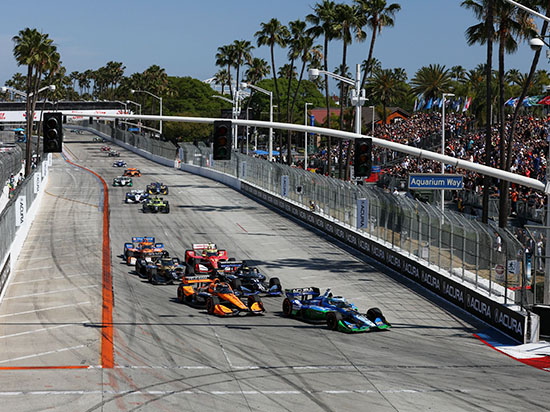
Felix Rosenqvist started from pole in the No. 60 SiriusXM/Acura Honda for Meyer Shank Racing and led a commanding 51 of 90 laps around the 11 turn, 1.9 mile temporary street circuit. Palou, starting third in the No. 10 OpenAI Chip Ganassi Racing Honda, worked his way past Pato O'Ward on Lap 2 and maintained pressure throughout. Both title contenders pitted in tandem at the end of Lap 31 for mandatory Firestone alternate tyres, with the MSR crew winning that exchange and Rosenqvist pulling out a three second cushion.
The race pivoted on Lap 57. A large piece of debris triggered the only caution period of the afternoon, and the entire field pitted on Lap 59. Chip Ganassi Racing serviced Palou's car in 7.3 seconds.
Meyer Shank Racing needed 8.4 seconds for Rosenqvist. That 1.1 second difference was enough to send Palou out of his pit box in the lead for the first time. He led every lap from the Lap 61 restart onwards, eventually crossing the line 3.9 seconds clear. Scott Dixon completed a strong weekend for CGR with third in the No. 9 PNC Honda.
Kyle Kirkwood finished fourth for Andretti Global, with O'Ward fifth in the No. 5 Arrow McLaren Chevrolet. With his third win in five races, Palou extended his championship lead to 17 points over Kirkwood as he targets a record equalling fourth consecutive series title.
The Street Circuit Engineering Challenge
Long Beach presents specific and demanding engineering conditions. The temporary circuit is laid on public roads, which means surface variation, aggressive kerbs, and as Sunday demonstrated, the ever,present risk of debris. Teams must engineer for a surface that offers far less grip than a permanent circuit, while managing tyre behaviour across three compound strategies in 90 laps.
Suspension geometry is critical on street circuits. Wishbones, uprights, and bump stop assemblies must absorb repeated heavy kerb strikes without deforming or affecting camber consistency over a race distance. This is where material specification becomes decisive rather than incidental. The difference between a high-strength aluminium alloy optimised for fatigue resistance and a standard aerospace-grade billet is not always visible, but it is measurable, particularly in components subjected to cyclic loading on a street course.
The Pit Lane as a Materials Environment
Sunday's decisive pit stop exchange between CGR and MSR illustrates the engineering demands placed on pit equipment. Wheel guns, jack heads, and the structural elements of pit lane tooling are subjected to considerable cyclic stress across a race weekend.
The wheel retention components on IndyCar machinery must be machined to tight tolerances from materials that combine high tensile strength with low density, titanium alloys are prevalent here for good reason. When a single pit stop can determine race outcome, teams and their suppliers must have absolute confidence in the consistency and traceability of their materials. There is no margin for a substandard batch of alloy in a component loaded and unloaded at speed multiple times across a weekend. Total material traceability is a baseline expectation for everything we supply to the motorsport sector at Smiths High Performance, not an optional enhancement.
Why Material Consistency Matters All Season
As the season builds towards May and the Indianapolis 500, teams across the grid will be examining their supply chains with increasing scrutiny. Component failure at this stage of a title fight has consequences that compound across multiple rounds. For IndyCar teams and the machine shops, fabricators, and component manufacturers supporting them, the relationship with your engineering materials supplier becomes genuinely business,critical. Speed of delivery, product availability, cut-to-size processing, and laboratory testing support can determine whether a design update reaches the car before the next race or not.
How Smiths High Performance Supports IndyCar Teams
We supply high-performance alloys and engineering plastics to IndyCar and NASCAR teams, as well as Formula 1, Formula E, MotoGP, WEC, and WRC. Our stock portfolio is selected specifically to meet the demands of motorsport's most challenging engineering applications, including the aluminium alloys, titanium grades, maraging steels, and specialist plastics that feature extensively in IndyCar car construction and pit equipment.
Our UKAS Accredited Testing Laboratory provides an independent verification capability that standard stockholders cannot match. When your design team specifies a particular mechanical property, you can test against it rather than relying solely on a mill certificate. That level of assurance matters more at the sharp end of a championship than at any other point in the season. The Sonsio Grand Prix at Indianapolis Motor Speedway's road course runs on 9th May, with the 110th Indianapolis 500 to follow on 24th May.
If your team is planning component revisions ahead of May, now is the time to confirm your material supply. Contact our technical team to discuss your requirements.
Smiths High Performance supplies advanced engineering materials to racing teams across Formula 1, MotoGP, IndyCar, and allied motorsport categories, from its facilities in Biggleswade, UK and Maranello, Italy. To discuss your engineering materials requirements, contact the team at www.smithshp.com or call +44 (0)1767 604708.