
Bahrain GP Cancelled: How F1 Engineers Use Unexpected Downtime to Develop Faster Cars
The cancellation of the Bahrain Grand Prix is not merely an administrative inconvenience. For the engineers and designers who had spent months optimising every component on their car for the specific demands of the Bahrain International Circuit, it represents the loss of something that no simulator or wind tunnel session can fully replicate: live race data from a real track, under real conditions, at race pace.
In Formula 1, data drives every decision. The telemetry generated across three practice sessions, qualifying and 57 race laps at Sakhir would have fed directly into the development process for every remaining race on the calendar. Without it, teams are carrying assumptions into Miami that they cannot yet verify. Understanding what those assumptions were, and how engineering departments will now deploy their unexpected time, tells you a great deal about the design philosophy and circuit-specific engineering that underpins the sport.
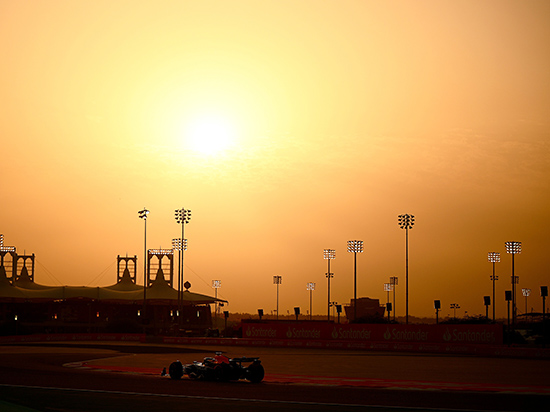
What Bahrain Demands from an F1 Car
The Bahrain International Circuit places a very specific set of demands on an F1 car. Its abrasive tarmac surface, laid on a substrate that retains desert heat, accelerates tyre degradation at a rate few circuits match. The combination of long straights, hard braking zones — most notably at Turns 1, 4 and 10 — and sustained medium-speed corners pushes the car's systems through extreme thermal cycles.
Track surface temperatures regularly exceed 40°C during daylight sessions, though Bahrain runs under floodlights in the evening, meaning teams must engineer for wide temperature swings across a single race weekend as the track cools significantly once the sun sets.
Then there is the desert environment itself. Fine sand ingress is not merely a nuisance. It infiltrates any system where tight dimensional tolerances are critical to performance, changing the behaviour of components in ways no model predicted at the design stage. Engineers working for Bahrain take this seriously, specifying materials with high surface hardness and abrasion resistance at every vulnerable interface.
The circuit is also one of the safest on the calendar. Wide run-off areas and long braking zones give drivers a genuine margin for error, which translates to one of the lowest safety car probabilities of the season. Teams planning for Bahrain could therefore commit to race-length tyre strategies and energy deployment plans with a confidence that a circuit like Jeddah, next on the original schedule, would never permit. That predictability shapes engineering decisions from aerodynamic configuration right through to power unit calibration.
The 2026 technical regulations, which introduced the most significant changes in the sport's recent history with a substantially increased electrical power contribution, added further complexity to Bahrain preparation.
Understanding how the new hybrid systems perform under sustained thermal stress — with cooling circuits working close to their limits in desert ambient temperatures — was expected to generate data critical to development for the remainder of the season. That understanding will now have to wait.
What Engineers Do With the Time
The critical question for every team is not whether this cancellation represents a loss — it does — but how the freed engineering resource is deployed. Race weekends consume enormous organisational bandwidth: logistics, tyre strategy, reactive decision-making, and continuous setup changes between sessions. With Bahrain removed from the schedule, that bandwidth redirects to the factory.
For aerodynamicists, the priority is simulation reallocation. Analyses too computationally expensive to run during the compressed timeline of a normal race preparation cycle can now be interrogated in full. Diffuser sensitivity studies, floor edge geometry optimisations and front wing configuration work can be examined at a level of detail that the standard race schedule simply does not permit. The teams that use this window aggressively will arrive at Miami with an aerodynamic understanding of their car that those who treated the gap as downtime rather than development time will not have.
For powertrain engineers, the dynamometer becomes central. Without the race-derived data on hybrid energy recovery behaviour that Bahrain's braking profile would have generated — 57 laps of hard braking events cycling the MGU-K through high-load regeneration sequences — the focus shifts to extended dyno programmes that simulate those load cases before transitioning to Miami's quite different power circuit demands. Energy deployment mapping, engine brake calibration and thermal management strategies all benefit from the uninterrupted time a cancelled race weekend creates.
Structural and suspension engineers have used the time to review components that passed design sign-off but that the engineering team may have had reservations about in the context of Bahrain's specific demands. New geometry iterations, revised surface treatments and improved manufacturing solutions can be evaluated and signed off in a timeframe that a normal race calendar would never allow.
Smiths High Performance's rapid response supply capability and bespoke supply solutions are designed precisely for this scenario — ensuring that when a team identifies a material requirement outside its standard procurement window, the right specification is available with the full traceability that Formula 1's quality management demands.
The Bridge to Miami
Miami International Autodrome shares almost no surface or layout characteristics with Bahrain. Its smooth, relatively low-grip tarmac contrasts sharply with Sakhir's abrasive desert surface. Its braking zones are fewer and less thermally demanding. Its safety car probability — elevated by barrier proximity and the compressed semi-street circuit layout — is significantly higher than Bahrain's open environment.
The circuits also differ markedly in their demands on the 2026 hybrid systems. Where Bahrain would have tested regeneration under high-temperature sustained braking, Miami presents a more varied energy profile across a lap that mixes high-speed sections with tighter technical corners. Teams that have used the factory time well will have modelled both circuits on the dynamometer, arriving in Florida not merely prepared for Miami but with a broader understanding of their car's energy behaviour across the range of conditions the season will present.
The engineering work completed in preparation for a race at Sakhir was not wasted. Simulation models built for Bahrain's abrasive surface inform the understanding of tyre behaviour across all circuits. Thermal analyses conducted for the desert heat environment provide reference data for managing comparable loads in Miami's May humidity. Design decisions validated against Bahrain's hard braking profile establish margins that carry directly to any circuit where brake performance is a limiting factor.
This adaptability reflects the material science philosophy that Smiths High Performance applies across its entire motorsport supply range: not providing solutions that address a single circuit's demands, but supplying advanced engineering materials whose performance characteristics span the full breadth of conditions a modern Formula 1 season presents. The teams that work with Smiths High Performance as a Tier 1 supply chain partner benefit from that philosophy at every race, and in every unexpected gap between them.
Smiths High Performance is a leading international stockholder and supplier of advanced engineering materials to Formula 1 and the wider motorsport sector. To discuss your material requirements, visit smithshp.com or contact the technical team directly.