
Brazil 2026: The Engineering Battles Behind Bezzecchi's Historic Fourth Win
Marco Bezzecchi crossed the line at the Autódromo José Carlos Pace on 22nd March to take his fourth consecutive MotoGP Grand Prix victory, and with it, the Championship lead.
It was a historic result for Aprilia, their first back-to-back wins in Brazil, and their first time leading both the riders' and constructors' standings this deep into a season.
Jorge Martin completed an Aprilia 1-2. Fabio Di Giannantonio took third after a compelling rematch with Marc Marquez that the Ducati rider ultimately could not win. Francesco Bagnaia and Joan Mir both crashed out.
The narrative was rich. But as with every MotoGP round, the story that shaped the result was written long before the lights went out on Sunday, in the engineering decisions, materials choices, and supply chain preparations that defined what each machine was capable of when it mattered.
Interlagos is a circuit that tests bikes and engineers in ways that are specific, demanding, and underappreciated. This is that story.
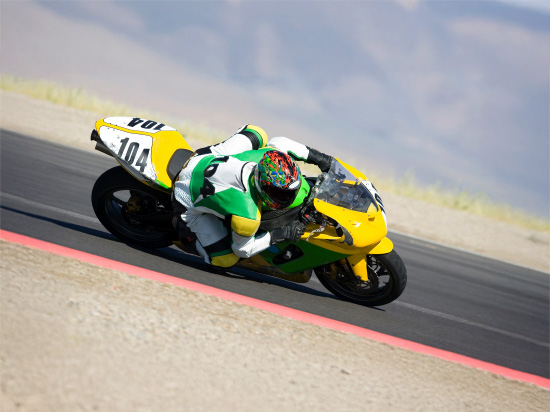
Interlagos: Why This Circuit Is an Engineering Problem
The Autódromo José Carlos Pace sits at approximately 785 metres above sea level on the outskirts of São Paulo. That altitude is not dramatic by the standards of some circuits on the global calendar, but it is sufficient to alter engine breathing characteristics, affect the cooling behaviour of key systems, and modify the aerodynamic balance of a MotoGP machine in ways that cannot be fully replicated in testing at sea-level European circuits.
For engineering teams preparing their advanced engineering materials specifications and component designs for Brazil, these variables are factored in, but they still produce surprises when the rubber meets the road in race conditions.
The circuit itself is anti-clockwise, which places asymmetric lateral loading on tyres, suspension components, and the chassis structure throughout a race distance. The combination of a fast first sector, a heavily braked middle section, and the long, undulating final sequence creates a machine that must be simultaneously compliant and rigid, a contradiction that is resolved in the choice of high-performance alloys throughout the chassis and suspension architecture.
The temper condition of the aluminium swingarm, the grade of titanium in the steering head assembly, the specification of the rear linkage components, all of these choices carry consequences at Interlagos that they would not necessarily carry at a more conventional European venue.
The Di Giannantonio and Marquez Collision: A Structural Engineering Moment
One of the defining moments of the Brazilian Grand Prix was not a mechanical failure but a collision, and it is worth examining from an engineering perspective. On lap six, Di Giannantonio launched a significant move up the inside of Marc Marquez, and both riders ran wide.
It was aggressive but clean racing. Neither machine suffered terminal damage. Both riders continued, and both ultimately finished on the podium or in the top four.
What is remarkable about moments like this in MotoGP is not the drama, it is the fact that the bikes survive them at all. The structural loads transmitted through a MotoGP chassis during a hard contact event, even a glancing one, are enormous.
The materials that absorb and distribute those loads, high-performance aluminium alloys in the frame and swingarm, titanium alloys in the fastening and linkage architecture, carbon fibre in the bodywork and structural panels, are chosen precisely because they can manage impact events without catastrophic structural failure whilst remaining light enough to compete.
This is not an accident of design. It is the result of extensive work between team engineers and their motorsport alloys suppliers to select materials whose mechanical properties, specifically their yield strength, elongation at break, and impact toughness, are appropriate for the forces they will encounter in race conditions.
A material that is optimised purely for stiffness and weight reduction may perform brilliantly in clean running and fail unpredictably under the kind of contact load Interlagos produced on lap six.
The right balance is found through technical collaboration between engineering teams and specialist advanced engineering materials partners who understand what these components are actually asked to survive.
Bagnaia and Mir: When Setup Decisions Go Wrong
Francesco Bagnaia and Joan Mir both crashed out of the Brazilian Grand Prix. In Bagnaia's case, a crash in a race he needed points from is a significant championship setback. In Mir's case, it continued a difficult start to 2026 for the Honda operation.
Crashes in MotoGP are rarely simple. They are the endpoint of a chain of decisions, aerodynamic setup, tyre selection, suspension specification, electronics calibration, where one or more choices has placed the machine outside the boundary of what the rider can manage at racing pace.
From a materials perspective, the relevant question is not what caused the crash, but what the materials had to do when it happened, and what they must do in the run-up to it.
Brake system components are a useful example. The caliper mounts, the disc carriers, the master cylinder bodies, these are components manufactured from high-performance aluminium alloys and titanium alloys to exacting specifications.
In a race where a rider is pushing beyond the limit of tyre grip in the late braking zones, the consistency and predictability of these components under sustained thermal load directly affects whether the rider gets the feedback they need to manage the boundary between control and loss of traction.
A material that has been incorrectly specified, or that has been sourced without full traceability to its chemistry and mechanical property certification, may perform differently under load than the engineer expects. In MotoGP, that difference can be a tenth of a lap time, or it can be a crash.
Total traceability in engineering raw materials is not a bureaucratic requirement. It is a performance and safety discipline. Every part that goes onto a MotoGP machine needs to be traceable to the mill certificate that confirms its chemistry, its mechanical properties, and its processing history. Without that traceability, the engineer cannot be certain what they have put on the bike.
The Brazil-to-Texas Supply Window
MotoGP heads north from Brazil to Texas for the Red Bull Grand Prix of the United States, and the turnaround between these two rounds is tight. Teams leaving Interlagos on Sunday evening face a transcontinental logistics challenge: getting people, equipment, and any revised components to the Circuit of the Americas in Austin within days.
This is where the global motorsport supply chain earns its place in the championship.
When a team's engineering review of the Brazilian data identifies a component that needs modifying, a swingarm specification that needs revisiting following the asymmetric loading behaviour observed at Interlagos, a brake caliper mount that has shown unexpected wear characteristics, a fastener grade that needs upgrading, they need to act immediately.
The window between rounds in the Americas leg of the calendar is not long enough to accommodate delays.
For a specialist supplier of advanced engineering materials operating with a global coverage model, this is precisely the kind of demand the business must be structured to meet. Rapid response supply of engineering raw materials in the correct alloy grade and temper, accompanied by full traceability documentation, is not a premium service, it is the baseline requirement for operating as a supply chain partner at the front of global motorsport.
Teams at this level do not have the luxury of waiting for standard lead times. When they need bespoke supply solutions delivered against a tight inter-round deadline, the supplier either has the stock, the knowledge, and the logistics infrastructure, or they are not a viable partner.
What Aprilia's Dominance Tells Us About Materials Engineering
Bezzecchi's four consecutive victories are a story about a rider at the peak of his form and a team whose technical direction is clearly working. But they are also, from an engineering materials perspective, a story about consistency.
Winning four races in a row in MotoGP requires a machine that behaves predictably across four different circuits, four different tyre compounds, four different ambient and track temperature profiles.
That consistency comes from engineering decisions that were made months earlier, and from the confidence that the advanced engineering materials at the heart of every critical component on the bike will perform to specification every time.
Aprilia's success in 2026 is built on a platform. And platforms are built from materials
Where Smiths High Performance Fits In
As a leading stockholder and supplier of high-performance alloys, motorsport metals, and advanced engineering materials to the global motorsport sector, Smiths High Performance understands the engineering reality behind results like Brazil.
The technical team has long-standing relationships across all forms of global motorsport, from Formula 1 to MotoGP, and the depth of knowledge to advise on material selection, alloy development, and bespoke supply solutions that meet the specific demands of the world's most competitive racing series.
That means stocking motorsport alloys that most general distributors do not carry, high-performance aluminium alloys including 2618A for fatigue-critical applications at elevated temperatures, and 7068, one of the highest-strength aluminium alloys in the portfolio, 2099 Ali-lithium adding strength and saving density, ultimately saving weight and an excellent design and engineering solution, titanium alloys including Ti6Al4V and specialist high-performance grades used in structural fasteners and suspension components; nickel superalloys such as Inconel® 718 for exhaust and high-temperature applications; and motorsport plastics including VICTREX™ PEEK for structural insulation and demanding mechanical applications.
Every product is supplied with total traceability to mill certification, because in MotoGP and Formula 1, there is no acceptable alternative.
Smiths also offers in-house processing services, cutting engineering raw materials to customer-specific size requirements with the accuracy that high-technology motorsport engineering demands.
And behind every supply decision sits the UKAS-accredited materials testing laboratory, unique within the UK stockholding sector, providing metallurgical support and independent verification of material performance when it matters most.
Smiths High Performance's technical team is highly proficient in providing material solutions for the motorsport sector, with long-standing relationships with customers in all forms of global motorsport, including Formula 1, Formula E, and MotoGP, from fabricators to the racing teams themselves.
That market focus is not incidental. It is the reason teams come to Smiths when the engineering challenge is specific, the deadline is tight, and the margin for error is zero.
MotoGP is heading to Texas. The engineering conversations are already underway.
Ready to take the championship lead? So are we.
Four races in. Bezzecchi leads the championship. The leading teams are the ones whose engineering decisions, and supply chain partners, held up under pressure.
Smiths High Performance is a leading stockholder and supplier of advanced engineering materials, high-performance alloys, titanium alloys, nickel superalloys, and motorsport plastics to the global motorsport sector.
Total traceability. Rapid response supply. In-house processing services. UKAS-accredited materials testing. Bespoke supply solutions built around your programme.
If you are working on a MotoGP programme or any high-performance engineering application where material quality, traceability, and supply certainty are non-negotiable, we want to hear from you.